Achaemenid rule in the northwest: inscriptions and uncertain borders
Read the evidence for Persian imperial connections while distinguishing royal lists from modern reconstructions of provincial administration.
Through the centuries
Follow changing landscapes, institutions and everyday lives. Dates and boundaries matter.
180 sourced entries · alphabetical directory · page 1 of 10
The entries and directory links are available below. The filter appears when it loads.
Read the evidence for Persian imperial connections while distinguishing royal lists from modern reconstructions of provincial administration.
The Lahore kingdom depended on revenue officers, record keepers, military pay systems and grants of income. Its travelling court joined these routines to ceremony and diplomacy.
Read the 1907 Punjab protests through Rai’s own argument and named parliamentary speakers, separating agrarian grievances, political claims and detention.
Agricultural change in Pakistani Punjab involves water control, investment, crops and labour, with uneven effects on livelihoods.
Follow Ahmad Shah Durrani’s Punjab campaigns through the 1752 settlement and Multan’s governors, where military advances met contested provincial rule.
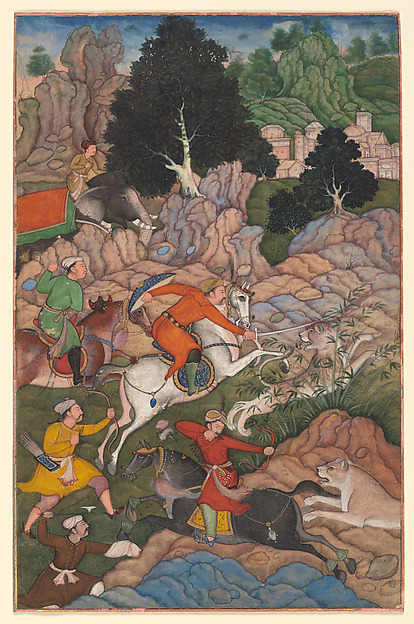
Punjab was important to Akbar’s political career and to the later Lahore court. Administrative scholarship and a surviving manuscript folio illuminate different sides of that connection.
The campaign of 326 BCE brought Alexander into conflict with Porus and ended its eastward advance when his army refused to continue. Ancient narratives and victory images preserve different kinds of evidence.
Compare Shahbazgarhi and Mansehra, then read what a translated proclamation can and cannot tell us about its audience.
Read selected evidence for Aurangzeb in Punjab through a translated letter, a mosque history and scholarship, keeping each case’s scope and limits clear.
Follow Banda Singh Bahadur’s campaigns through Chappar Chiri, regional support and the Gurdas-Nangal blockade, keeping capture and execution distinct.
Read Namdev’s reception and memorial alongside a study of shared reverence, keeping textual inclusion, patronage and situated modern practice distinct.
Study towns, religious institutions and donated objects together, without reducing Buddhist movement to a single commercial cause.
Canal construction and planned settlement transformed parts of western Punjab under British rule. Their history concerns the distribution of land and power as much as the movement of water.
Follow Punjab census answers through copying, sorting and compilation, then examine how a later researcher made changing categories comparable across time.
Chandigarh was planned as a capital after Partition. Its history includes successive architects and villages affected by construction.
Learn how dated sediments distinguish an ancient river channel from a river flowing beside a Harappan settlement.
Children experienced Partition through varied journeys, separation and displacement. Their memories illuminate family and community histories.
Colonial military recruitment linked Punjab to employment, political relationships and training institutions, as shown by records and historical analysis.
No matching entries on this page. Search the complete section or clear the filter.
How we use sources, explain uncertainty and correct mistakes.
Your browser could not save your reading list. It will be lost when you leave this page.