Gujranwala: a haveli within a changing city
A courtyard house associated with Ranjit Singh, municipal growth and a modern conservation project reveal different layers of Gujranwala’s urban history.
Pakistan Punjab
Cities, rivers & landscapes
Explore settlements and heritage sites across both modern Punjabs and connected regions.
250 sourced entries · alphabetical directory · page 5 of 14
Historical Punjab and the two modern administrative Punjabs have different boundaries. Every place is described within its stated scope.
The entries and directory links are available below. The filter appears when it loads.
A courtyard house associated with Ranjit Singh, municipal growth and a modern conservation project reveal different layers of Gujranwala’s urban history.
A Mughal-era water structure, a modern manufacturing cluster and the changing use of Ram Pyari Palace offer three distinct ways to read Gujrat.
Discover Gurdaspur town, its district’s changing boundaries and the sources used to study them.
Kartarpur’s Darbar Sahib commemorates Guru Nanak’s life and community. A pre-corridor field study and the 2019 agreement show how a sacred place also acquired a distinctive modern history of access.
Gurdwara Dera Sahib, near Lahore Fort and the Badshahi Mosque, is a Sikh shrine associated with Guru Arjan.
Gurdwara Janam Asthan marks the place traditionally associated with Guru Nanak’s birth; Nankana Sahib was also the site of a 1921 tragedy.
Gurdwara Panja Sahib in Hasan Abdal is associated with Guru Nanak and Sikh remembrance of a railway event in 1922.
A nineteenth-century administrative town developed a documented rice and textile economy, followed by new provision for local higher education.
Harappa’s mounds preserve successive settlements, including its major urban phase. Excavated buildings invite interpretation, not certainty about their purpose.
Harike Wetland lies at the Beas–Sutlej confluence in Punjab. Its birdlife and water system face conservation pressures.
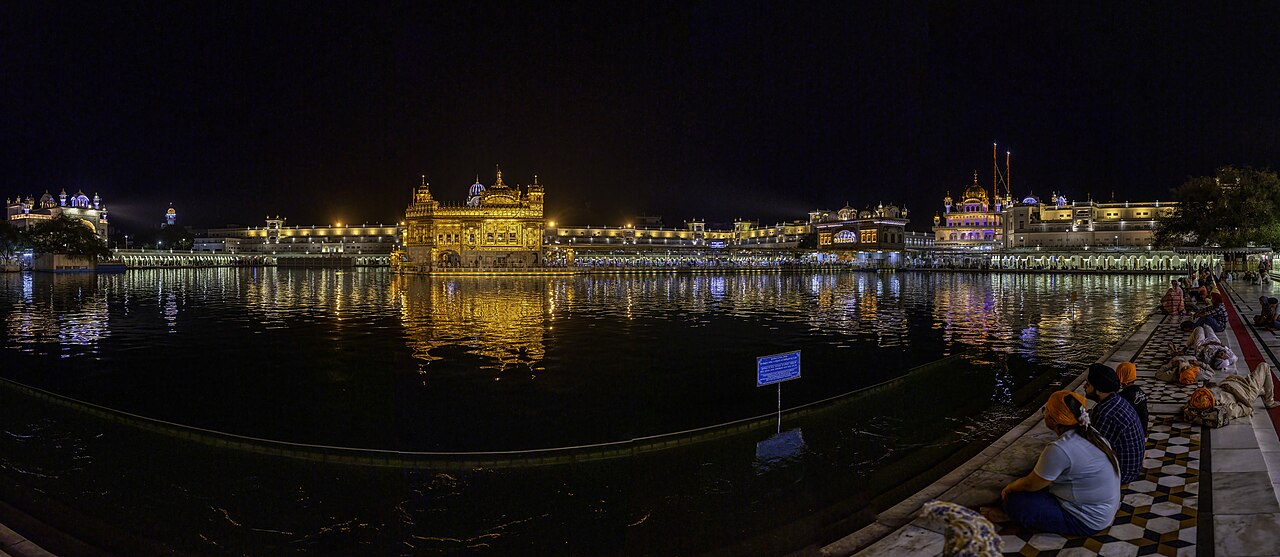
Harmandir Sahib in Amritsar connects the history of the Sikh Gurus, a distinctive waterside sanctuary and continuing worship and service. Its later infrastructure has a documented history of its own.
Follow the Haro River from its hill catchment to the Indus and explore Khanpur Dam.
Trace Haroonabad’s municipal history and the role of canal water in its surrounding landscape.
Hasilpur’s market planning developed in a canal landscape; schools and local institutions add later layers to the town’s history.
Hazuri Bagh is a Lahore garden between the fort and Badshahi Mosque, with a marble baradari and a history of changing uses.
Hira Mandi’s history encompasses a Lahore neighbourhood, markets, performance and sex work, rather than a single fixed identity.
Hoshiarpur lies near the Shivalik foothills. District histories describe its changing administration and tradition of wood inlay.
A study of colonial boundary-making and a 2025 municipal plan reveal Isa Khel at different administrative scales.
No matching entries on this page. Search the complete section or clear the filter.
How we use sources, explain uncertainty and correct mistakes.
Your browser could not save your reading list. It will be lost when you leave this page.